How do marginalized communities build systemic power that is enduring rather than merely episodic? For many grassroots organizers, the answer is deeply rooted in culture.
If we want evaluation to add real value to social change efforts, both funders and evaluation consultants have to re-examine their roles and how they relate.
A growing number of new initiatives are seeking to transform philanthropic evaluation in ways that can better support them and the social change they are after. We represent three of these efforts.
It can be hard to understand how equitable evaluation applies to any evaluation, even for strategies that do not explicitly focus on advancing equity. Julia Coffman writes about her “aha” moment, when she realized that equitable evaluation should be at the center of all of her work.
Learning leaders from fourteen foundations participated in a year-long "Lab for Learning" to experiment with and test ideas for supporting learning in foundations. Several “ground truths” guided this work.
The kinds of questions we often pose — Did the intervention work? What are we learning about a particular issue? — may lead to information that is a useful input into learning, but they often don’t help us determine what to do next. This webinar shows us how to ask questions that, if answered, will make a difference in how we do our work.
Developmental evaluation can create anxieties and disappointments for evaluation commissioners and evaluators who apply conventional evaluation routines to an evaluation endeavor that is fundamentally different.
With advocacy, a “win” can mean avoiding a disadvantageous policy or holding the line on past wins. This brief covers how advocates conceptualize five different types of defense, and how to think about defense-specific outcomes, impact, and evaluation.
Advocacy evaluators need to reckon with evaluating 501(c)(4) tactics, otherwise we will find ourselves unable to speak meaningfully to the progress and setbacks our clients experience.
The Colorado Health Foundation experienced multiple organizational transitions in a short period of time, including two strategy redesigns, culture and values shifts, new expectations and assumption about roles and performance, and a new CEO. This teaching case invites reflection on the role of evaluation staff and consultants amidst the uncertainty and ambiguity of organizational change.
As efforts at driving change become more diffuse, involve more actors, and have more transformational goals, we need a radically different approach to thinking about and assessing effective advocacy. Clear answers, certain judgments, and simple tools won't result in good representations of reality. This brief proposes ideas for adjusting how we approach advocacy monitoring, evaluation, and learning.
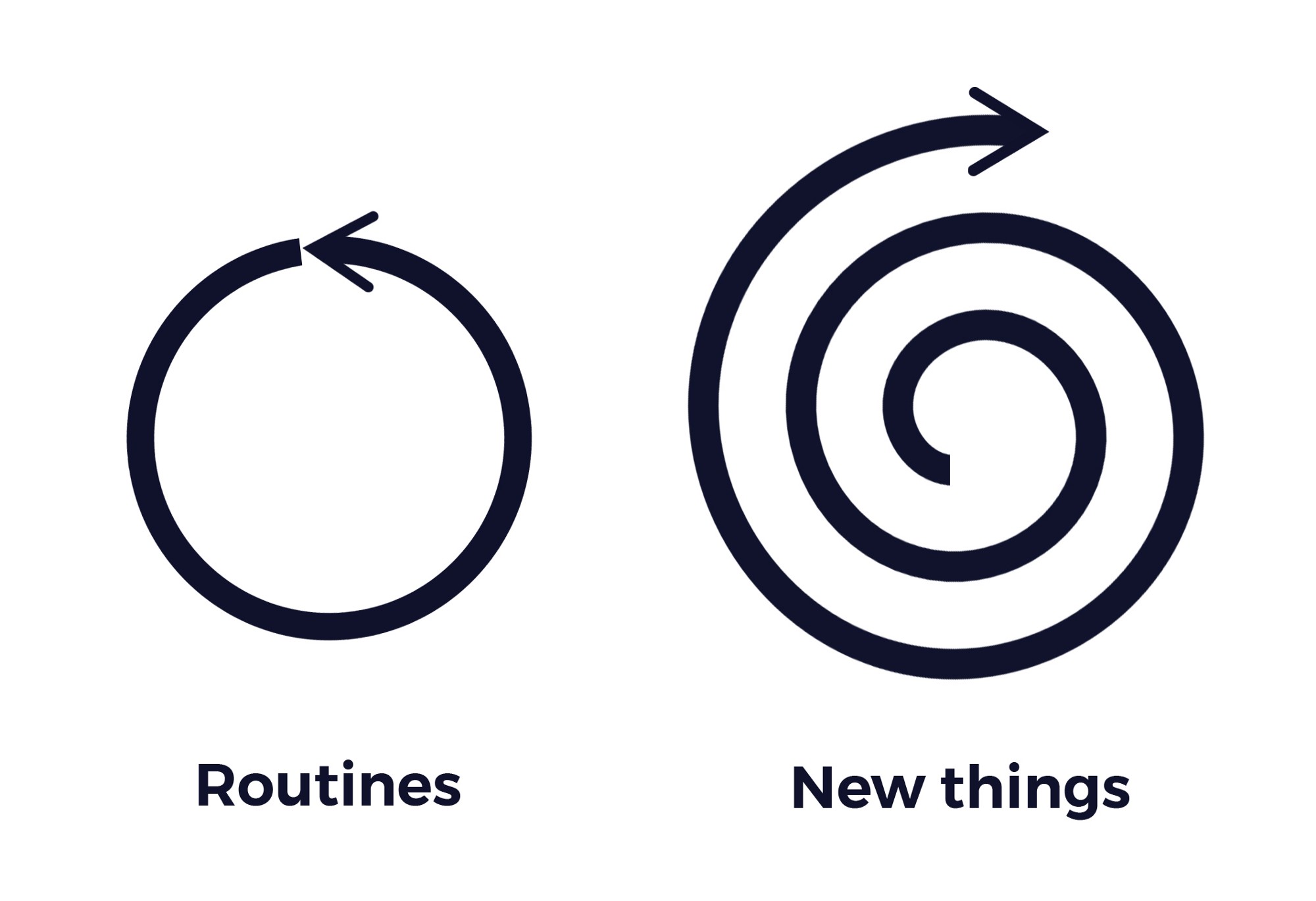
Establishing a learning organization or culture is such a big goal that it can overwhelm our ability to act on it. This piece, published on Medium, explores how building learning habits into common routines makes it more manageable, and creates small wins that can lead to big change. Focusing on habits ensures that learning is not a separate activity, but rather is integrated into our day-to-day work.
Better habits around learning are critical to improving philanthropic practice. This piece looks at what needs to happen before and after habit change to make a new way of working stick.